15 November 2026
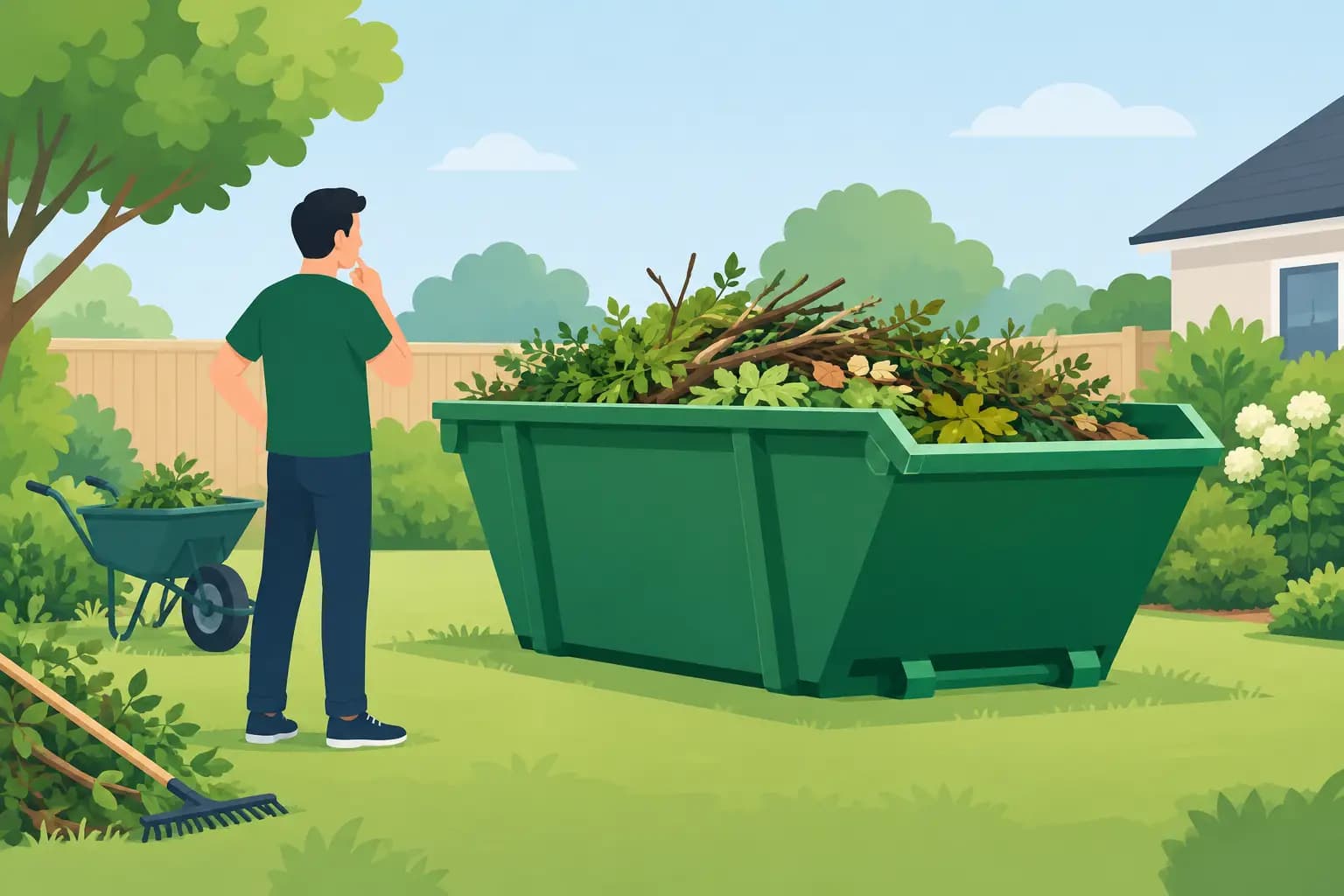
A weekend in the garden can leave a bigger pile than expected. One hedge trim becomes branches, palm fronds, weeds, old pots and a ute-load of cuttings spread across the lawn. A skip bin for garden waste keeps the job moving, particularly when council collection will not take the volume or the waste is too bulky for your green bin.
The key is matching the bin to what you are clearing. Green waste, soil, timber, old fencing and general rubbish are not always handled the same way. Tell us what is in the pile before booking, and you can get the right bin, the right price and no surprises at collection.
When a skip bin makes sense for garden waste
A skip is a practical option when you are doing more than a quick tidy-up. It suits a major prune, backyard overhaul, rental property clean-up, landscaping work or clearing an overgrown block before selling or renovating. It also saves repeated trips to the tip, which can be hard work when branches do not fit neatly in the boot or on a trailer.
For Sydney properties, access often matters as much as volume. Inner-city terraces, apartment blocks, sloping driveways and narrow side access can all affect where a bin can sit and which truck can deliver it. Give the address and a clear picture of the access when requesting a quote. Local drivers can assess the practical details before the booking is confirmed.
A standard hire period gives you time to cut, load and sweep up without rushing. If your gardener or landscaper is coming on a particular day, organise the bin to arrive beforehand rather than leaving green waste piled on the nature strip.
What can go in a skip bin for garden waste?
Most garden clean-ups include grass clippings, leaves, weeds, branches, pruning, bark, untreated timber and small amounts of plant matter. But the exact waste mix matters. A bin filled with clean green waste may be managed differently from a mixed bin containing old garden furniture, pavers and fencing.
Soil is the big one to flag early. It is heavy, and even a modest mound can add up quickly. Rocks, concrete, bricks and pavers are also heavy materials that may need a specific bin type or a lower fill level. Do not assume they can go into a green waste bin just because they came from the garden.
The same goes for treated timber. Old sleepers, painted fencing, decking, retaining-wall timber and manufactured boards can require separate handling from clean branches. If you are pulling out an old garden bed, shed or fence at the same time, describe every material in the quote request.
Some items should never be placed in a skip bin. These include chemicals, paints, oils, fuel, gas bottles, asbestos, batteries and other hazardous materials. Keep these out of the bin and arrange the correct disposal method instead. If you are unsure about an item, ask before loading it.
Choose the size before you start cutting
Garden waste is light compared with bricks or soil, but it is awkward. Long branches and palm fronds create air pockets, so a pile that looks manageable on the lawn can take up far more space in a bin than expected.
A compact 2m³ bin can suit a small courtyard clean-up, light pruning or a garden-bed refresh. It is often a sensible choice where driveway room is limited and the waste is mostly leaves, clippings and smaller branches.
For a typical suburban backyard prune, several garden beds or a moderate hedge removal, a mid-sized bin usually gives more breathing room. If you are clearing an established garden, removing shrubs or combining green waste with approved general rubbish, it is worth allowing extra capacity. An overflowing bin can delay collection and creates a safety issue.
Large landscaping jobs, acreage clean-ups and commercial work may need one of the bigger bins, up to 13m³. Bigger is not automatically better, though. If the load includes soil, concrete or wet turf, weight can become the limiting factor. The best approach is to explain the job, estimate the waste volume and mention any heavy material. We will help work out the right option.
A simple way to estimate volume
Look at the pile after you have cut branches down to manageable lengths. Ask whether it would fill a small box trailer once, twice or several times. Then allow for bulky branches that will not stack tightly. If you are between sizes, choosing the larger bin can be cheaper and easier than ordering a second bin later.
Do not base the choice on the size of the garden alone. A small yard with mature hedges can produce more waste than a large lawn with a few garden beds.
Load the bin safely and make the space work
Put heavier approved material at the bottom first, then build up with lighter green waste. Cut long branches into shorter lengths where practical and place them lengthways to reduce empty gaps. Compress loose leaves and clippings in garden bags only if the bags are accepted for the waste type, and avoid throwing in soil-covered roots without checking first.
Keep every item below the top edge of the bin. Rubbish sticking out over the rim is unsafe for transport and may mean the driver cannot collect it. It can also damage nearby cars, fences or low branches when the bin is lifted.
Make sure the delivery area is clear before the truck arrives. Move cars, bins, trailers and children’s toys from the driveway. Check for low-hanging tree branches, powerlines and tight gates. A skip needs room for the truck to reverse, lift and place it safely.
If the bin needs to sit on the road or footpath, you may need a permit from the relevant local council. Permit requirements vary across Greater Sydney, so check this before delivery. The property owner or customer is generally responsible for arranging approval unless another arrangement has been confirmed.
Avoid mixing waste without checking
It is tempting to use spare room in a garden bin for anything lying around the yard. That can cause problems when the contents are assessed. A few plastic pots may be manageable in a mixed-waste booking, but adding a broken barbecue, tyres, mattresses, paint tins or demolition material changes the load completely.
Be upfront if the clean-up includes more than vegetation. A clear description lets the quote account for the waste type from the start. It also helps avoid sorting, contamination or extra disposal costs after collection.
If you are working with a landscaper, agree on who is responsible for the bin and what they plan to place in it. This is especially useful on jobs involving excavation, retaining walls, turf removal or new paving, where green waste and heavy construction materials can build up at the same time.
Book around the way you work
The easiest booking starts with the job details: your Sydney address, preferred delivery date, where the bin will go, the waste you have and an estimate of how much there is. A quote-first process means the price, access and waste type can be checked before you commit.
Lego Skip Bin operates with its own trucks and bins, so you deal with a local team that can confirm delivery and collection details directly. For urgent work, calling is often the quickest way to check availability. For planned garden work, book early enough to secure the dates that suit your gardener, landscaper or weekend schedule.
Once the bin arrives, keep the area around it accessible and load it steadily across the hire period. A properly chosen bin turns a messy backyard project into a clear run of work: cut it, load it, clear the space and get back to enjoying the garden.
Ready to book? Request a quote or call 0402 000 221. More articles on the blog.