12 November 2026
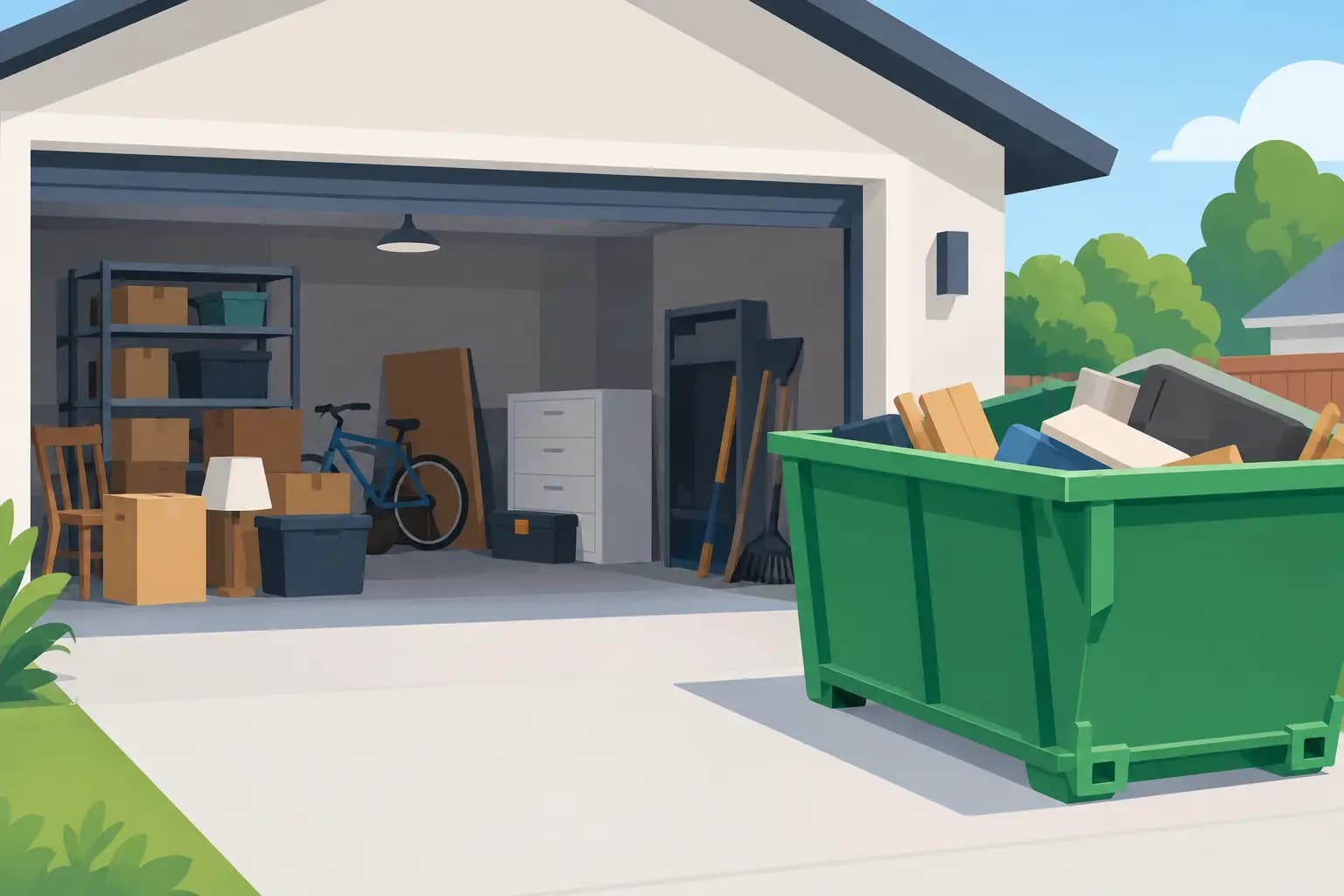
A garage clean-out usually starts with one box and ends with half the garage on the driveway. A skip bin for garage cleanout work gives you one place for the old shelving, broken furniture, garden gear and mystery items that have been sitting there for years. The key is choosing a bin that suits the actual pile, your access and the type of rubbish you need removed.
For Sydney households, the easiest approach is to sort as you go, keep restricted materials aside and arrange delivery before the rubbish starts spilling onto the footpath. That keeps the job moving and makes collection straightforward.
Start by seeing what is really in the garage
Garages collect a mix of bulky household rubbish, renovation leftovers, garden equipment and items that cannot go into a standard skip. Before booking, pull everything into loose groups. You do not need to create perfect piles, but you do need a realistic picture of the waste.
Old cupboards, timber offcuts, cardboard, plastic storage tubs, mattresses, bikes, household furniture and general clutter are common garage clean-out items. If you have usable furniture, tools or sporting equipment, consider giving those away or taking them to an op shop first. A smaller rubbish pile can mean a smaller bin.
Be particularly careful with anything stored in tins, bottles or containers. Paint, oils, fuel, chemicals, gas bottles, batteries, asbestos and other hazardous materials need separate handling. They should not be placed in a regular skip bin. Tyres, e-waste and certain heavy materials may also have specific disposal requirements. Tell the bin provider what you have before you book, rather than hoping it can be sorted out on collection day.
Choosing a skip bin for garage cleanout waste
The right bin size depends less on the floor area of your garage and more on what is leaving it. A single-car garage filled with bags, boxes and a few broken household items may suit a compact bin. A double garage with old cabinets, workbenches, shelving, timber and furniture can take far more room than expected.
Lego Skip Bin supplies bins from 2m³ through to 13m³, so there is room to match the bin to a quick household tidy-up or a much bigger clear-out. If you are unsure, describe the items, the garage size and whether bulky furniture is involved when requesting a quote. Photos can also help where available.
It is usually better to allow a little room than to order a bin that is too tight. Overfilled bins cannot be safely transported. Rubbish must sit below the rim, with nothing sticking out over the top or hanging from the sides. If you can close the mental picture of the bin with a flat lid, you are on the right track.
Think in volumes, not bags
Rubbish bags can be misleading. Twenty bags of soft household clutter may take less room than one dismantled wardrobe, while an old lounge can fill a surprising amount of a small bin. Break down cardboard boxes, dismantle shelving where safe and stack flat items carefully. Do not compact waste by climbing into the bin or force materials down with heavy equipment.
A good rule is to base the size on the largest items first, then allow space around them for smaller rubbish. If the garage includes a workbench, metal shelving, cabinets or multiple bulky items, mention this at the quoting stage.
Plan where the bin will sit
A driveway is generally the simplest place for a skip bin. It keeps the bin close to the garage and avoids the need for a council permit in many situations. Make sure there is enough clear space for the truck to place and collect the bin safely.
Move cars, trailers, pot plants and loose items before delivery. Check for low-hanging branches, overhead wires, narrow gates and steep driveways. If the garage is down a tight side access or you live in an apartment complex, explain that when you enquire. Local drivers who know Sydney streets can help assess practical access before the booking is confirmed.
Putting a bin on the road or footpath may require a permit from the relevant local council. Permit rules vary by area, and the customer is generally responsible for arranging approval where it is needed. Do not assume a bin can be placed on the street just because neighbours have done it before.
If you are concerned about the driveway surface, speak up before delivery. The bin can often be positioned with care, but the best option depends on access, surface type and available space.
Load the bin in the right order
The first items into the bin matter. Place flat, heavy and bulky materials at the bottom. Timber, dismantled cabinets and shelving can create a stable base. Fill the gaps with smaller household rubbish, bags and loose items as you work through the garage.
Keep a clear path from the garage to the bin. It is tempting to drag everything outside first, but that can leave you with a blocked driveway and nowhere to work. Instead, clear one zone at a time: a back wall, a shelving unit, a workbench, then the floor. You will see progress quickly and avoid re-sorting the same rubbish.
Do not save all the awkward items for last. Large furniture and long lengths of timber are easier to position while there is still room to arrange them properly. If something is too heavy to lift safely, get help. A garage clean-out is not worth an injured back.
Book around your actual clean-out window
Most garage jobs take longer than expected, especially when you are deciding what to keep, donate or throw away. A standard skip bin hire period is seven days, which gives most households enough time to work at a sensible pace.
Choose delivery for the day before your planned clean-out where possible. That gives you time to prepare the driveway and means the bin is ready when you are. If you need a bin urgently, call rather than waiting on an online enquiry. Availability, bin size and access all need to be checked first.
A quote-first booking is useful for this type of job because garages rarely contain one simple waste stream. Provide the delivery address, preferred dates, likely waste type, estimated volume and any access details. Once the price, bin, placement and collection timing are confirmed, you can start clearing without second-guessing the logistics.
Avoid the two common garage clean-out problems
The first problem is ordering too small because the garage looks manageable when everything is packed tightly. Once items are pulled apart and stacked loosely, the volume grows. Be honest about the pile, particularly if furniture, cupboards or old building materials are involved.
The second is treating the bin as a catch-all for restricted waste. Set aside paint tins, chemicals, batteries, gas bottles and other questionable items as soon as you find them. If you are not sure whether something can go in the bin, ask before loading it. It is far easier to get clear advice early than to unload an item later.
Leave the garage ready to use
Once the rubbish is gone, sweep the floor and look for the things that are worth keeping but need a proper home. A few labelled tubs, wall hooks or sturdy shelves can stop the same build-up from returning next summer.
You do not need to turn the garage into a showroom. The goal is simpler: room for the car, the tools you use and the things you actually want to keep. Tell us about the job, the rubbish and the access. We will help sort the bin so you can get the garage back.
Ready to book? Request a quote or call 0402 000 221. More articles on the blog.